

Radionics is often dragged into arguments about medicine. That is unfortunate because it narrows the field before the discussion even begins. This may be because the people who discovered the principles of radionics and the first people who adopted it were all medical doctors and chiropractors.
The moment the word “medicine” appears, people take sides. One side expects miracles. The other side reaches for ridicule, regulation, or both. Very little useful conversation happens after that. Everyone is already wearing armor.
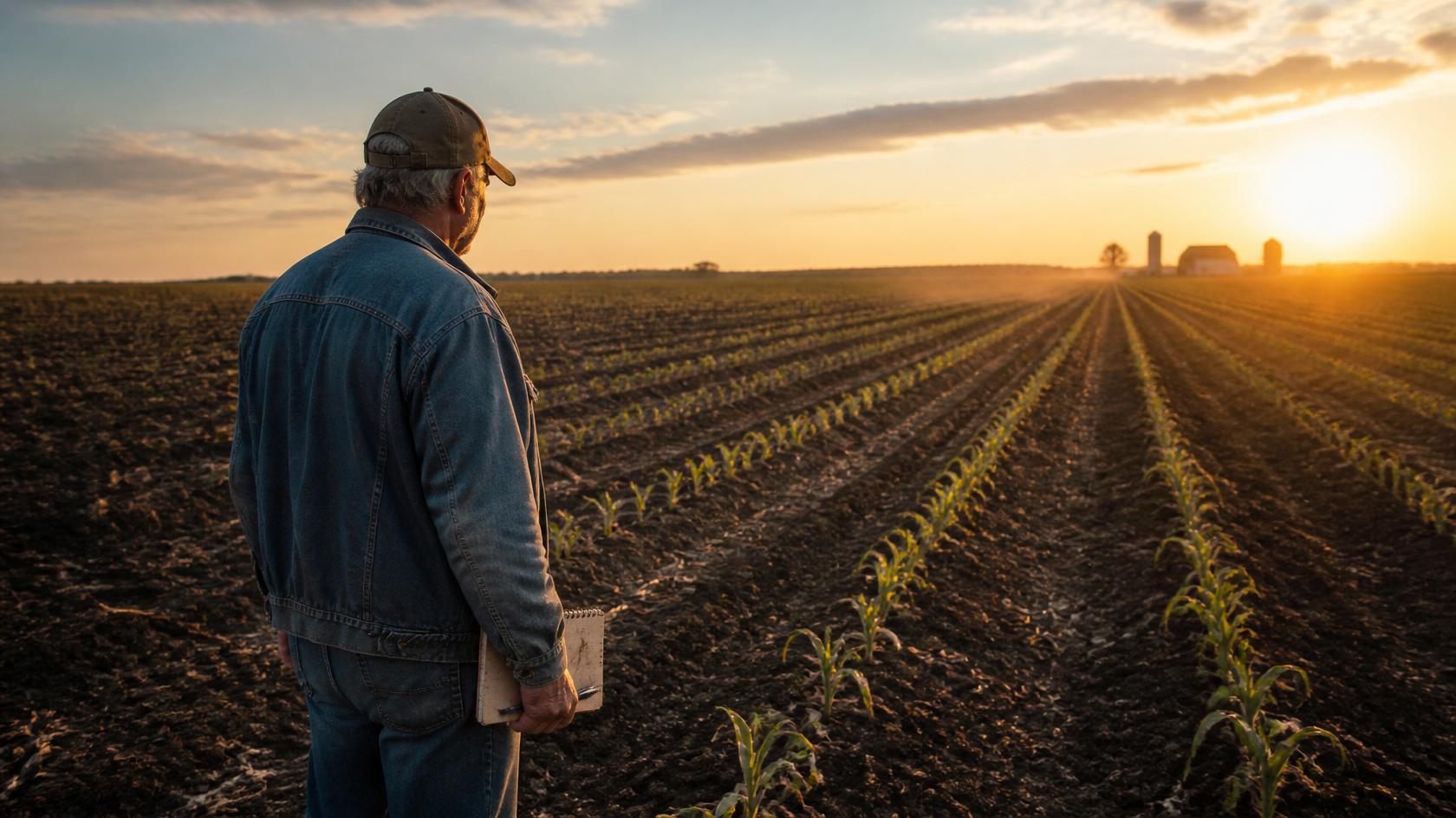
Agriculture may be a better place to understand radionics.
A farm is not simple. Anyone who thinks a farm is simple has never had one. A farm is soil, the soil biome, water, weather, seed, insects, fungi, animals, timing, machinery, money, labor, luck, and a thousand things that are invisible until they go wrong. A farmer lives in a world of patterns. He may not use that word, but he knows it in a very gut-felt way.
He knows when a field is tired.
He knows when the weather “feels wrong.
He knows when one section of land behaves differently from another, even though the map says it is all the same farm.
He knows that two crops planted in similar conditions may produce different results.
He knows that life is not a factory; it is messy and inconsistent.
This makes agriculture a natural place for radionics thinking. A farmer already understands that results come from relationships. Soil is not dirt. It is a living system. Seeds are not inert objects. They are biological instructions waiting for the right conditions. Water is not just wetness. Timing is not just a date on a calendar. Everything matters.
That does not mean a farmer should stop the farming process and only use radionics. That would be foolish. The plow still matters. Soil testing still matters. Water still matters. Pest management still matters. Good records still matter. Radionics should not become an excuse to avoid ordinary competence.
But radionics may ask questions that ordinary farming does not have a way of asking.
What is the informational condition of this field?
What pattern is active in this seed?
Can I remove pests from this field without chemicals?
Can I enhance the growing process of my crop?
Is this problem primarily nutritional, biological, environmental, energetic, informational, or some mixture?
Is there resistance in the land or elsewhere?
Is the timing wrong?
Is the operator asking the right question?
A conventional agricultural expert may object to these questions. That is fine. Experts have objected to many things before eventually using them under a different name. History is full of delayed acceptance.
The farm itself is less ideological. It either responds or it does not. Crops are not impressed by credentials. Soil does not care about committee opinion. Results matter. Money and livelihood are on the line. There is no room for false ideas that affect results.
This is one reason agricultural radionics has always interested many operators. The feedback may be easier to observe than in more personal work. A field changes. Plants grow or fail. Insects increase or decrease. Yields improve or do not. The result is not always simple, because weather and management remain powerful factors, but the operation can be studied, and the results can be measured more easily as numbers.
While the result may be obtained, it may not be obtained in the way imagined. If a farmer needed productivity and thought it would come in the form of increased yield per acre, it may in fact come by increased protein levels in the yield, which increases the value. The farmer got what they wanted, productivity, even if not in the way they believed it would happen.
Radionics in agriculture should not be a parade of stories. Stories are useful, but they are not enough. A serious operator should keep records. What field was worked on? What witness was used? What rates or programs were applied? What was the intention? What was the duration? What else was done in the farming practice? What was observed later?
Without records, the operator learns slowly. With records, even failures become useful.
Agriculture also helps move radionics out of a defensive posture. Instead of arguing endlessly about diagnosis or treatment, the operator can discuss balance, vitality, soil condition, seed potential, pest pressure, and environmental pattern. These are broader and often more accurate categories. Finally, the results are easy to measure. This also avoids making claims that do not need to be made.
A farmer using radionics should not promise miracles. Farming itself teaches humility. One storm can ruin a season. One drought can erase a plan. One late frost can make a fool out of the most experienced man in the county. Radionics does not remove reality. It works within reality, or it does not work at all.
Still, I think the farm may understand radionics better than the city.
The city likes arguments, titles, licenses, and fashionable opinions. The farm likes results. The city asks whether an idea fits the approved vocabulary. The farm asks whether the seed came up.
That does not mean agriculture will make radionics accepted overnight. Nothing in this field moves that easily. But it may provide a better classroom. A farm is a living laboratory with less patience for theory that never touches the ground.
Radionics, properly understood, is not merely about the body. It is about information, pattern, intention, and relationship. Agriculture is full of all four.
Maybe that is why the farm has always been one of the more natural homes for radionics.
© August 2026 by Peter V. Radatti